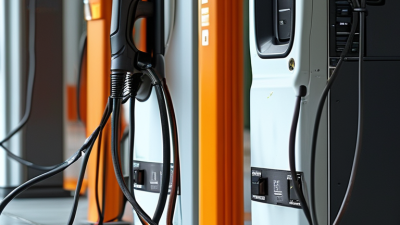
Choosing the right EV Wallbox for global sourcing is not simply a price comparison. It is a decision about safety, compatibility, installation, software, and long-term support. A unit that performs well in a showroom may struggle in a humid garage, a cold warehouse, or a busy apartment car park. Small details matter, including cable length, connector design, load management, and enclosure protection.
Jörg Reichert, CEO of CharIN, has stressed that “interoperability is essential for convenient and reliable charging.” This principle should guide every sourcing project. Buyers need to check whether the EV Wallbox supports relevant charging standards, communication protocols, grid requirements, and vehicle types across target markets. Certification documents should be verified, not merely displayed on a sales page. Software updates also deserve attention. A charger without dependable remote management can become expensive after installation.
The best choice is rarely the cheapest model. It is the model that remains dependable after thousands of charging sessions. Ask difficult questions. Can the supplier provide test reports, replacement parts, warranty terms, and technical training? Can the factory explain failure rates with real data? These answers reveal more than polished product images.
There is also room for doubt. Global sourcing can expose buyers to hidden adaptation costs, uncertain after-sales service, and changing regulations. A careful evaluation reduces those risks, but it cannot remove them completely. This guide examines the practical criteria that help businesses compare EV Wallbox suppliers with greater confidence, clearer evidence, and fewer costly assumptions.
Choosing an EV wallbox begins with a clear charging profile, not a catalog search. Count the vehicles, daily mileage, parking hours, and available electrical capacity. A home with one car may need a simple 7 kW unit. A depot with ten vehicles may require load balancing, scheduling, and three-phase power. Measure the installation space too. A compact garage can make cable storage unexpectedly important.
Your global sourcing goal should be equally specific. Decide whether you need the lowest purchase price, stable long-term supply, rapid delivery, or customization. Ask suppliers for test reports, safety documentation, firmware support details, and warranty procedures. Confirm connector compatibility, enclosure protection, operating temperatures, and communication functions. These details affect installation costs more than a small unit-price difference. Request production samples before placing a large order. A sample can reveal loose terminals, confusing instructions, or weak cable hinges.
I once underestimated packaging requirements for a long-distance shipment. The units arrived functional, but several cartons were damaged. That mistake changed my evaluation checklist. Now I review pallet strength, spare-part availability, inspection records, and response times before comparing quotations. Still, a checklist cannot predict everything. Supplier audits and independent testing add confidence, but they do not remove every risk. Define acceptable defects, delivery delays, and support response times in writing. Keep the requirements practical, measurable, and suitable for the destination market.
Choosing an EV wallbox for global sourcing starts with its power rating. Common options range from 3.7 kW to 22 kW. A 7.4 kW unit can suit many homes with single-phase power. A 22 kW model needs suitable three-phase infrastructure. It may charge faster, but only when the vehicle and site support it. Check voltage, current limits, cable size, and protection requirements before comparing prices. In practical procurement, a lower-rated unit can be more reliable than an oversized model. I have seen impressive specifications become useless because local wiring could not support them.
Charging speed also depends on battery capacity, temperature, load management, and the vehicle’s onboard charger. A wallbox cannot force a car to accept more power. Connector compatibility requires equal care. Type 1 and Type 2 connectors serve different vehicle markets, while cable length affects daily convenience. Confirm whether the cable is fixed or detachable. Review safety testing, installation guidance, ingress protection, and service support. Certification documents should match the destination market, not merely the factory location.
Tips: Request real charging curves, not only maximum ratings. Test connector fit with target vehicles. Confirm spare-part availability before ordering. Leave some capacity for future vehicles. A rushed comparison can miss small details, such as cable strain or unclear display readings. That mistake is easy to make.
How to Choose the Best EV Wallbox for Global Sourcing?
As electric vehicle sales grow, compliance becomes a purchasing priority. The IEA Global EV Outlook 2024 recorded nearly 14 million electric car sales in 2023, representing more than 18% of global car sales. A wallbox must match this expanding market without creating regional safety risks.
Check compliance before comparing prices. IEC 61851 covers conductive charging systems, while IEC 62196 defines plugs, sockets, and vehicle connectors. ISO 15118 may support advanced communication between the vehicle and charger. Certification should also match the destination market. European shipments may require CE conformity under applicable directives. North American projects often require evaluation by an accepted safety certification body. Other regions may require national marks, testing, or registration.
Do not trust a certificate alone.
Ask for the test report, certificate number, product revision, and factory address. Confirm that the certified model matches the shipped hardware, firmware, cable rating, and enclosure. In procurement reviews, small differences matter. A different residual-current device can change the compliance status. So can a modified connector or updated control board. The International Energy Agency also reported that global public charging points exceeded four million in 2023, showing how quickly charging infrastructure is scaling. Yet fast growth can encourage rushed sourcing. A practical audit should test overheating protection, grounding, water resistance, emergency shutdown, and load management. Regional grid voltage and installation rules deserve equal attention. A compliant product in one market may still need redesign elsewhere.
| Target Market | Typical AC Supply | Common AC Charging Interface | Key Safety and Technical Standards | Main Regulatory or Certification Requirements | Essential Sourcing Checks |
|---|---|---|---|---|---|
| International Baseline | Usually single-phase or three-phase AC, depending on the installation | IEC 62196-compatible Type 1 or Type 2 systems |
IEC 61851-1 for conductive charging systems; IEC 62196 for plugs, socket-outlets, vehicle connectors, and vehicle inlets; IEC 60364-7-722 for low-voltage electrical installations |
Conformity must be assessed against the destination market’s legislation, approved standards, and installation rules | Confirm the exact standard edition, rated current, environmental rating, temperature range, and test reports for the final product configuration |
| European Union and EEA | 230 V single-phase or 400 V three-phase, 50 Hz | Type 2 is the standard AC interface for most public and private charging applications |
EN IEC 61851-1; EN IEC 62196-2; HD 60364-7-722 or applicable national implementation; EN IEC 61851-21-2 for EMC requirements; IEC 62955 may apply to residual direct-current detection |
CE marking under applicable Low Voltage, EMC, RoHS, and other relevant EU legislation; additional radio requirements apply to wireless-enabled products | Request the EU Declaration of Conformity, technical file summary, EMC and electrical-safety reports, IP/IK evidence, leakage-current protection details, and multilingual safety instructions |
| United Kingdom | 230 V single-phase or 400 V three-phase, 50 Hz | Type 2 is widely used for AC charging |
BS EN IEC 61851-1; BS EN IEC 62196-2; BS 7671, including Section 722 for electric vehicle charging installations |
UKCA or applicable accepted marking route; electrical equipment, EMC, radio, and hazardous-substance rules may apply according to product features | Check residual-current protection, protective bonding, PEN-fault protection where required, load management, installer instructions, and current UK smart-charging obligations |
| United States | 120/240 V or 120/208 V split-phase or three-phase systems, 60 Hz | SAE J1772 AC interface; SAE J3400 may be used for compatible North American vehicle connections |
UL 2231-1 and UL 2231-2 for personnel protection; UL 2594 for electric vehicle supply equipment; NFPA 70 National Electrical Code, Article 625; FCC Part 15 for applicable unintentional or intentional radio emissions |
A nationally recognized testing laboratory certification or listing is commonly required by authorities having jurisdiction; local electrical permits and code requirements also apply | Verify the certification covers the exact model, input rating, cord or hardwired configuration, enclosure, connector, firmware-related functions, and intended indoor or outdoor use |
| Canada | 120/240 V or 120/208 V systems, 60 Hz | SAE J1772 is widely used for AC charging; SAE J3400 may be supported where specified |
CSA C22.2 No. 280 for electric vehicle supply equipment; CSA C22.1 Canadian Electrical Code; Applicable Canadian EMC requirements |
Canadian certification or field evaluation recognized by the applicable provincial or territorial authority is generally required before installation | Confirm certification marks accepted in the destination province, cold-weather performance, cable flexibility, enclosure protection, and installation instructions in English and French where required |
| Australia and New Zealand | 230/240 V single-phase or 400/415 V three-phase, 50 Hz | Type 2 is common for AC charging; local vehicle compatibility must be confirmed |
AS/NZS 3000 for electrical installations; AS/NZS 3008 for cable selection and current-carrying considerations; Applicable AS/NZS requirements for EV charging equipment and residual-current protection |
Regulatory Compliance Marking may be required for electrical and electronic equipment; state or territory installation rules also apply | Check local registration requirements, electrical safety documentation, RCD or DC leakage protection, outdoor UV resistance, surge protection, and installer licensing conditions |
| China Mainland | 220 V single-phase or 380 V three-phase, 50 Hz | GB/T 20234.2 interface for AC conductive charging |
GB/T 18487.1 for conductive charging systems; GB/T 20234.2 for AC charging couplers; GB/T 34657.1 for charging interoperability testing; Applicable GB/T EMC and electrical-safety standards |
Determine whether the exact product category is subject to China Compulsory Certification, type testing, market access filing, or other local requirements | Confirm Chinese-language labels, rated-voltage range, communication compatibility, leakage protection, temperature and humidity testing, and validity of all test reports for the final hardware revision |
| Japan | 100 V or 200 V single-phase systems; frequency is 50 or 60 Hz depending on region | Type 1 is commonly used for AC vehicle connections |
JARI or applicable Japanese technical requirements; JIS-based electrical safety and installation requirements; Local requirements under the Electrical Appliances and Materials Safety framework where applicable |
Check whether the product falls within a regulated electrical-appliance category and whether PSE or another approval route is required | Confirm compatibility with 100 V or 200 V supply, regional frequency, Japanese labeling, grounding arrangements, earthquake-resistant mounting, and local installation requirements |
| South Korea | 220 V single-phase or three-phase, 60 Hz | Type 1 and locally approved charging interfaces may be encountered; vehicle compatibility must be checked | Applicable Korean EV charging, electrical-safety, EMC, communication, and installation standards | KC certification or registration may apply depending on the equipment category, wireless functions, and intended use | Request Korean-language documentation, verify KC scope, confirm connector and communication compatibility, and check local requirements for residential or public installations |
| India | 230 V single-phase or 400 V three-phase, 50 Hz | Type 2 is used for many AC charging applications; local vehicle and infrastructure requirements must be confirmed |
IS 17017 series for EV conductive charging systems; AIS-138 requirements may apply to charging equipment and vehicle interfaces; Applicable Indian electrical installation and EMC requirements |
Bureau of Indian Standards certification or registration may be required according to the product category and current regulations | Check BIS scope, local grid conditions, earthing quality, surge protection, high-ambient-temperature operation, cable sizing, and documentation for authorized installation |
| Brazil | 127/220 V or 220/380 V systems, 60 Hz, depending on location | Type 2 and Type 1 may be encountered; confirm vehicle and local infrastructure compatibility | Applicable Brazilian electrical installation standards, EV charging requirements, product safety standards, and EMC rules | INMETRO conformity requirements may apply to the specific electrical product category; local utility and installation rules should also be reviewed | Verify voltage configuration, Portuguese labeling, protection against voltage fluctuation and surges, enclosure rating, and the exact INMETRO conformity route |
When sourcing an EV wallbox globally, smart features should solve real charging problems, not merely look impressive. A clear mobile interface, scheduled charging, energy monitoring, and dynamic load management are valuable in daily use. Remote diagnostics can reduce service visits, especially for commercial sites. However, cloud functions depend on stable connectivity. A simple offline charging mode remains important.
Compatibility requires careful checking. Confirm the local voltage, frequency, phase configuration, and maximum current before ordering. The connector must match the target vehicle market. Support for recognized communication protocols can simplify integration with energy systems. Ask for test reports, firmware policies, and protection details, including residual-current detection and overheating control. Certification should be suitable for the destination country, not just the factory location.
Installation quality often determines safety and charging reliability. Review cable length, mounting structure, weather resistance, ventilation needs, and available electrical capacity. A qualified local electrician should inspect the circuit and grounding. One common mistake is choosing a powerful unit for an undersized supply. It creates unnecessary cost and installation delays. Maintenance should include firmware updates, connector inspection, cleaning, and fault-log reviews. Request spare-part availability, response times, warranty terms, and technical manuals in advance. I would also test a sample in realistic conditions before placing a large order. Specifications can appear complete, yet small details may fail in the field.
Choosing the best EV wallbox for global sourcing requires more than comparing unit prices. Supplier capability matters.
Request factory audit records, production samples, and recent test reports. Check engineering depth, not only sales responsiveness. A reliable supplier should explain charging protection, enclosure ratings, cable options, and software updates clearly. Ask how defects are traced from incoming components to final inspection. During sampling, test socket fit, temperature rise, emergency shutdown, and repeated charging cycles. Small details reveal process discipline.
Calculate total cost before approving a supplier. Include tooling, packaging, certification, freight, duties, installation accessories, warranty reserves, and after-sales support. A cheaper unit may need stronger packaging or extra regional testing. That changes the landed cost. Delivery capability also deserves evidence. Review monthly capacity, component lead times, buffer stock, and backup production arrangements. Request a production schedule with inspection gates and shipment milestones. Do not trust a promised date without capacity data.
Quality control is never perfect. Our early comparisons sometimes focused too heavily on visible defects and missed connector heating. That mistake was expensive. Use an independent inspection when order value is significant. Define acceptance limits before production, including cosmetic tolerance, electrical performance, labeling, and carton damage. Suppliers should report nonconformities openly and provide corrective-action records. A realistic sourcing plan leaves room for retesting, customs delays, and design changes. Fast delivery is useful, but predictable delivery is safer.