Top Tips for Choosing the Right AC Charging Pile for Your Needs
When selecting an AC Charging Pile, understanding your specific needs is crucial. The global market for electric vehicle (EV) charging infrastructure is projected to reach $100 billion by 2026, according to a report by Fortune Business Insights. This growth highlights the increasing importance of efficient charging solutions.
Experts like Dr. Emily Carter, a leading authority in EV technology, emphasize, “Choosing the right AC Charging Pile can significantly influence charging efficiency.” Her insights underline the necessity of evaluating not just the charging speed but also installation space and compatibility with various EV models.
Many consumers overlook critical factors when shopping for an AC Charging Pile. It is essential to examine features such as power output and user interface. Failing to do so could lead to underwhelming experiences. Understanding market trends and expert recommendations will ensure informed decisions, ultimately optimizing your EV charging capabilities.

Understanding AC Charging Piles: Basics and Functionality
Understanding AC charging piles is crucial for electric vehicle (EV) owners. AC charging piles are essential for providing energy to EVs. They convert alternating current from the grid into direct current for vehicle use. Unlike DC chargers, AC chargers offer a slower but more widespread and convenient charging option. According to the International Energy Agency, there are over 1.3 million public AC charging points worldwide, highlighting their growing importance in the EV ecosystem.
When choosing an AC charging pile, consider your specific needs. The charging speed is a key factor. Most residential units deliver 3.7 kW to 22 kW of power. For home usage, a 7.4 kW unit is often sufficient. It can charge most EVs overnight. However, commercial setups may require higher capacities. Investigate compatibility with your vehicle's onboard charger. Not all vehicles accept the same power levels, which can create inefficiencies.
Tip: Always check installation requirements before purchase. Some piles need dedicated circuits. This can add to the overall cost, and installation might take time. Additionally, consider safety features and warranty terms. These factors ensure reliability over the charging unit's lifespan. Remember, not all piles are created equal, and poor choices can lead to issues—such as slower charging times or equipment failures.
Types of AC Charging Piles: Key Differences Explained
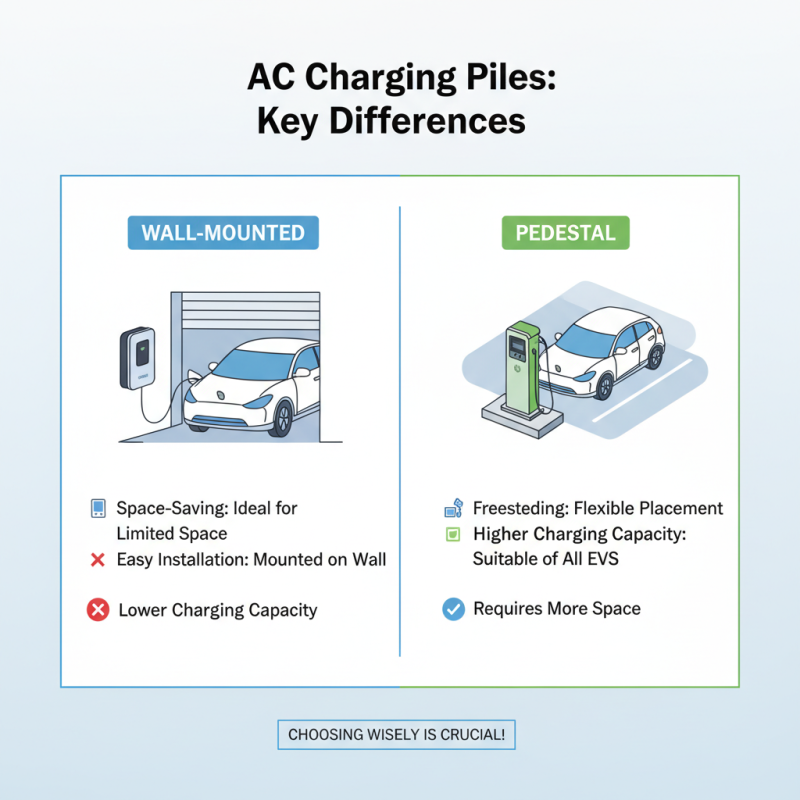
When choosing an AC charging pile, understanding the key differences between types is crucial. There are primarily two types: wall-mounted and pedestal charging piles. Wall-mounted units are ideal for limited spaces. They take up less room and can be easily installed. However, their charging capacity may not meet the needs of everyone.
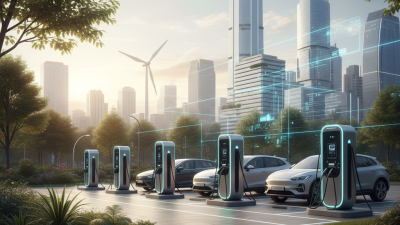
In contrast, pedestal charging piles are more suitable for commercial use or public settings. They often provide faster charging and can accommodate multiple vehicles. Yet, they require more space and a more complex installation. This means they may not be practical for residential areas. Consider your needs carefully before making a choice.
It's easy to overlook features when selecting an AC charging pile. Think about the location's power supply capacity. Some installations may need upgrades to support higher-output charging. Furthermore, assess how many vehicles you'll typically charge. Understanding these aspects will help in making an informed decision. Don't rush; reflect on your requirements and the environment where the pile will be used.
Factors to Consider When Choosing an AC Charging Pile
When selecting an AC charging pile, several factors come into play. Understanding your specific needs is crucial.
Assess the power output. Different vehicles require varying charging rates. Consider your daily driving habits. If you frequently make long trips, a higher power output can significantly reduce charging time.
Another important factor is installation convenience. Evaluate the space available at your home or workplace. Some charging piles are bulky and may require special installation.
Think about accessibility. Make sure it’s in a location that doesn’t hinder your regular movement.
Finally, ensure the charging pile conforms to safety standards. This not only protects your vehicle but also enhances reliability. Research the warranty and support services offered. A dependable brand may provide peace of mind during installation and use. These considerations can seem overwhelming, but careful thought can lead to the best choice for your situation.
Installation Requirements and Site Considerations for Charging Piles
When considering installation requirements for AC charging piles, various site considerations come into play. The location needs adequate space for installation. The charging pile must be placed in an easily accessible area. Reports indicate charging station access can enhance user experience. A designated space can accommodate multiple electric vehicles, ensuring efficiency.
The electrical infrastructure is crucial. Assessing the site's power supply is necessary. Installation may require upgrades to existing electrical systems. According to a study by the International Energy Agency, over 30% of installations face delays due to inadequate power supply. Ensuring sufficient amperage is vital for optimal performance.
Local regulations are another aspect to explore. Each region might have unique guidelines affecting installation. Understanding local zoning laws and safety standards is imperative. Sites in urban areas may face stricter regulations. This highlights the need for thorough research before installation. Making these considerations reflects a commitment to safety and efficiency in electric vehicle infrastructure.
Future Trends in AC Charging Technology and Their Implications
The future of AC charging technology is shaping up to be more efficient and user-friendly. New developments aim to enhance charging speed and reduce costs. Emerging trends in smart grid integration allow for optimized energy distribution. This means that EV owners will have more control over their charging schedules. Real-time data can inform users about the best times to charge, maximizing savings.
Another significant trend is the increasing simplicity of charger designs. Minimalist interfaces and mobile connectivity are becoming standard. Users can expect intuitive controls and easy access to charging status. Even with these advancements, challenges remain. Ensuring compatibility among various EV models is still a complex issue. There's also the concern of infrastructure readiness in certain areas. Despite these hurdles, the direction of AC charging technology is undeniably optimistic and driven by innovation.
Comparison of AC Charging Pile Power Ratings



 Phone
Phone Send Email
 whatsapp
 Facebook
 Youtube