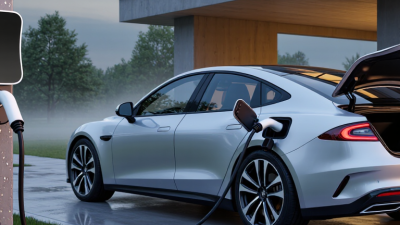
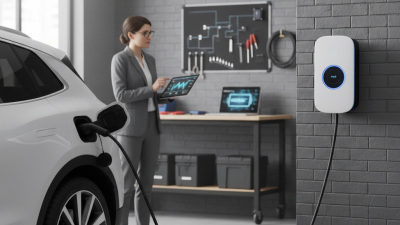
Electric vehicle ownership is moving from early adoption toward everyday transport. The International Energy Agency reported nearly 14 million electric car sales worldwide in 2023, representing about 18% of new car sales. That growth creates a practical question: where should drivers recharge most often? For many households, the answer is not a distant public station. It is the driveway, garage, or assigned parking space.
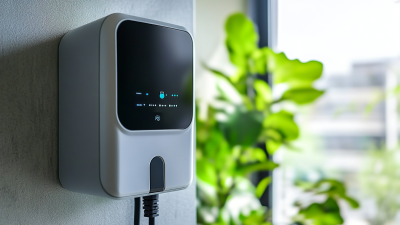
A Home AC WallBox Charger can turn overnight parking into useful charging time. A typical 7–11 kW unit may add meaningful range during several hours of nighttime charging, depending on the vehicle and electrical installation. The U.S. Department of Energy’s Alternative Fuels Data Center identifies Level 2 charging as a common residential solution because it operates faster than a standard household outlet. The experience is simple: connect after dinner, secure the cable, and start the next morning with a fuller battery. Quietly practical.
The benefits extend beyond convenience. Home charging can reduce repeated public-station visits, support scheduled charging, and potentially use lower electricity rates where utilities offer them. The IEA’s Global EV Outlook 2024 also highlights the continuing expansion of charging infrastructure and the importance of convenient access. Still, a wallbox is not automatically the right choice for every home. Installation costs, panel capacity, parking rights, weather protection, and local electrical requirements deserve careful review. That part is often underestimated. Choosing wisely means comparing charging speed with daily mileage, checking professional installation, and considering future vehicle needs. A Home AC WallBox Charger is valuable when it fits the household—not merely when its specifications look impressive.
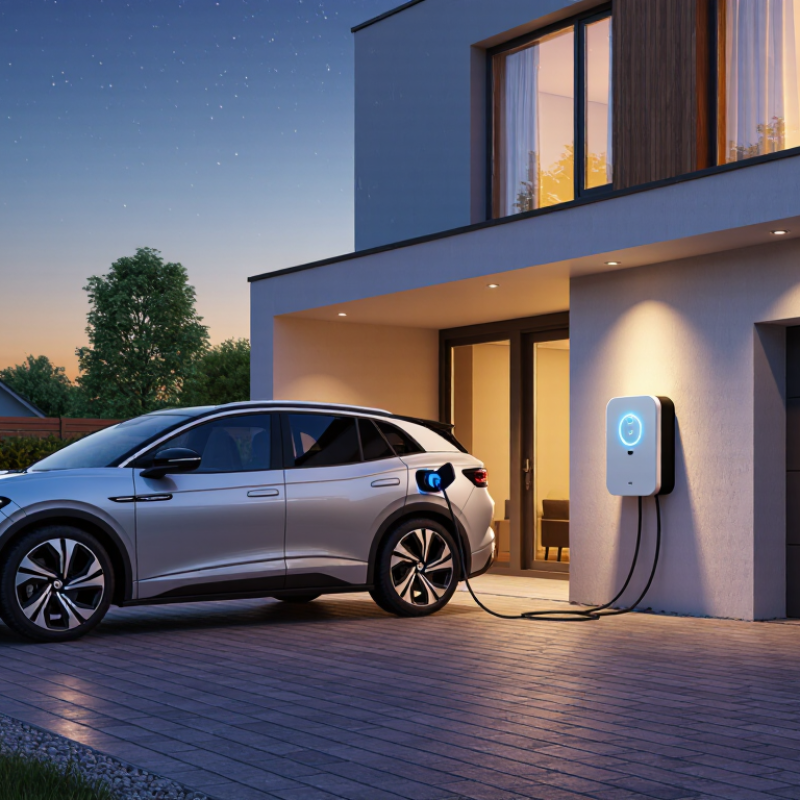
A home AC wallbox charger is a fixed charging unit installed on a residential wall or parking post. It supplies alternating current to an electric vehicle. The vehicle’s onboard charger then converts AC into battery-ready direct current. Most home units deliver between 7 and 22 kilowatts, depending on wiring, phase supply, and vehicle limits. Charging is slower than high-power public charging, but it suits overnight routines. Plug in after dinner, and the car may be ready by morning.
The International Energy Agency reported more than 14 million electric cars were sold worldwide in 2023. Its Global EV Outlook 2024 also notes that home charging remains important where private parking is available. A wallbox can provide safer cable management, clearer energy monitoring, and more consistent charging than a household socket. Still, “faster” is not always better. A 22-kilowatt charger adds little value if the vehicle accepts only 11 kilowatts. Electrical capacity matters too. The U.S. Department of Energy’s Alternative Fuels Data Center recommends checking circuit requirements before installation. That practical step is easy to overlook.
Tips: Check your vehicle’s maximum AC input first. Ask a qualified electrician to inspect the distribution board, cable route, and earthing. Choose adjustable current settings when possible. They can reduce household load during peak use. Leave room for imperfect conditions, such as winter temperatures, shared circuits, or a shorter parking stay.

A home AC wallbox connects your electric vehicle to the household power supply. It delivers alternating current, or AC, through a protected charging cable. The vehicle’s onboard charger then converts AC into direct current, or DC. This DC energy charges the battery. The wallbox does not usually perform the main conversion.
Inside the unit, control signals confirm that the cable is connected correctly. Safety systems can stop power when they detect overheating, leakage, or a damaged connection. A qualified electrician should check the circuit, grounding, and available capacity before installation. Local electrical rules matter. A neat garage installation still needs proper engineering behind it.
Charging speed depends on the wallbox output and the vehicle’s onboard charger. For example, a 7-kilowatt unit may add roughly 35 to 50 kilometers of driving range each hour. Actual results vary with battery size, temperature, and charging limits. I have found overnight charging easier than waiting at a public station. The car can charge quietly while dinner is cooking. Still, home AC charging is not always fast enough for urgent travel. Older wiring may also create unexpected costs. Load management can reduce strain when heating, cooking, and charging happen together. It is a practical system, but it rewards careful planning rather than optimistic assumptions.
Why Choose a Home AC Wallbox Charger?
What Benefits Does a Wallbox Offer EV Owners?
A home AC wallbox makes daily charging more predictable. Instead of searching for a public charger, owners can plug in beside their homes. Overnight charging often suits normal driving routines. The car may be ready each morning.
A dedicated wallbox usually delivers more power than a standard household socket. Charging can become noticeably faster, especially after a long commute. Many units support scheduled charging, which may help owners use lower electricity rates. However, savings depend on the local tariff and vehicle settings. It is not automatic.
Convenience also matters. A fixed cable, clear status light, and weather-resistant enclosure reduce small frustrations. Some wallboxes record energy use through an app or display. That information can reveal unusual consumption. It may also help families share charging fairly.
Safety deserves careful attention. A qualified electrician should check the home’s wiring, circuit capacity, grounding, and required protective devices. Installation should follow local electrical rules. A wallbox is not simply a larger plug. Poor installation can create real risks.
From practical use, the biggest benefit is routine. Arriving home, connecting the cable, and walking inside feels simple. Still, a wallbox cannot solve every problem. It may require costly electrical upgrades in older homes. I would also avoid choosing solely by maximum charging speed. The vehicle, home supply, and driving needs must match. Sometimes, a modest charger is the wiser choice.
A home AC wallbox can recharge an electric vehicle substantially faster than a standard household outlet. The chart shows estimated time to charge a 60 kWh battery from 20% to 80%, assuming 90% charging efficiency.
Choosing a home AC wallbox charger starts with daily driving, not the highest advertised power. The International Energy Agency reported nearly 14 million electric cars sold globally in 2023. That growth makes reliable home charging increasingly important. A 7.4 kW charger may suit many homes, especially when a vehicle sits overnight. Higher output can be useful, but only if the car and household electrical supply support it.
Safety and compatibility deserve close attention. The U.S. Department of Energy’s Alternative Fuels Data Center explains that Level 2 charging commonly uses a 240-volt circuit and can add roughly 10 to 30 miles of range per hour, depending on the vehicle. Look for adjustable current, residual-current protection, temperature monitoring, and certified installation guidance. Cable length matters too. A short cable can leave the connector hanging in rain or resting across a walking path. Small detail, real consequence.
Smart functions can reduce cost and strain on the grid. The International Energy Agency’s Global EV Outlook 2024 highlights the growing importance of managed charging as electric vehicle ownership expands. Scheduling can use lower-tariff periods, while load balancing helps prevent nuisance trips at home. Wi-Fi is convenient, but a charger should remain usable when the network fails. I would also question complicated applications and unclear data policies. More features are not automatically better. A clear display, dependable controls, and a strong warranty may serve everyday drivers better than an impressive specification sheet.
Why Choose a Home AC Wallbox Charger?
How Can You Plan a Safe and Practical Installation?
A safe home AC wallbox installation begins with a site assessment. Check the parking position, cable reach, wall strength, and exposure to rain. A qualified electrician should inspect the household supply and calculate the charger’s expected load. Never assume an existing socket is suitable. It may share power with kitchen appliances or heating equipment. A dedicated circuit, correctly rated cable, and suitable protective devices reduce overheating risks. Local electrical requirements also matter.
Tips: Keep the charger close to the parking bay, but away from standing water. Leave enough cable slack for different vehicle inlets. Mount it at a comfortable height. Keep the emergency isolation point accessible. Do not guess.
Before installation, discuss future needs with the electrician. A higher-capacity circuit may support another vehicle later, but only if the property can safely handle it. Ask for weather protection, residual-current protection, secure cable routing, and clear labeling. After installation, request insulation checks and functional testing. Test before daily use. I have seen practical plans fail because the cable was technically long enough, yet awkward across a walkway. That small detail can create repeated inconvenience and trip hazards. Review the route at night as well; poor lighting is easy to overlook. Keep the area clear, dry, and easy to reach.
| Planning Dimension | Typical Residential Data | Why It Matters | Safe Installation Guidance |
|---|---|---|---|
| Charging level | AC Level 2; commonly 3.6–7.4 kW for single-phase home installations | Provides substantially faster charging than a standard household socket while remaining suitable for overnight use. | Select output according to the vehicle’s onboard AC charger and the available household supply. |
| Supply voltage | Typically 220–240 V in many regions; approximately 208–240 V in North American homes | Voltage determines the charging power that can be delivered at a given current. | Have a qualified electrician verify the actual supply voltage before selecting equipment. |
| Rated current | Common settings include 16 A and 32 A; some units support adjustable current limits | A higher current can shorten charging time but places greater demand on the electrical circuit. | Use a dedicated circuit and set the charger no higher than the circuit and service capacity allow. |
| Dedicated circuit | Recommended for continuous EV charging loads | A dedicated circuit reduces the risk of overloading shared household wiring and outlets. | Do not share the circuit with ovens, water heaters, dryers, or other high-load appliances. |
| Electrical protection | Overcurrent protection plus residual-current protection; 30 mA RCD protection is widely used where required | Protection devices help limit the risk of electric shock, overheating, and wiring damage. | Follow local electrical codes and the charger installation instructions; do not bypass protective devices. |
| Service-panel capacity | Must accommodate the charger load together with existing household demand | Insufficient capacity may cause nuisance tripping or require an electrical upgrade. | Arrange a load assessment before installation; consider dynamic load management where permitted. |
| Installation location | Usually near the parking position, with cable reach commonly around 4–7 m | A suitable location improves convenience and reduces cable-trip hazards. | Mount on a solid surface, keep the cable away from vehicle paths, and protect it from sharp edges and standing water. |
| Indoor or outdoor use | Outdoor units should have an enclosure rating suitable for exposed conditions; IP54 or higher is commonly selected | Moisture and dust protection supports reliable operation and reduces corrosion risk. | Confirm the product’s environmental rating and installation requirements; avoid submerged or flood-prone locations. |
| Cable routing | Cable size depends on current, route length, installation method, ambient temperature, and local code | Longer or hotter routes can require larger conductors to control voltage drop and heat. | The electrician should calculate conductor size and voltage drop rather than choosing cable by appearance alone. |
| Charging schedule | Overnight or off-peak charging is commonly practical for home use | Scheduled charging can reduce peak household demand and may lower electricity costs where time-based tariffs apply. | Use the vehicle or charger schedule only after confirming that settings do not exceed circuit limits. |
| Typical charging time | Approximate time = energy added ÷ charging power; a 40 kWh battery may need about 5.5 hours at 7.4 kW before charging losses | Actual time varies with battery state, temperature, vehicle limits, and charging efficiency. | Plan around daily driving needs rather than maximum theoretical charger output. |
| Inspection and commissioning | Verification should include polarity, grounding, protective-device operation, connections, and functional testing | Testing confirms that the installation operates safely before regular charging begins. | Use a licensed or otherwise authorized electrician where required, obtain permits if applicable, and retain test records. |
Note: Electrical ratings, protection requirements, permits, and installation practices vary by country and local code. A qualified electrician should confirm the final design for the specific property and vehicle.