Leave Your Message

10 Best Outdoor Electric Car Chargers for Global Buyers

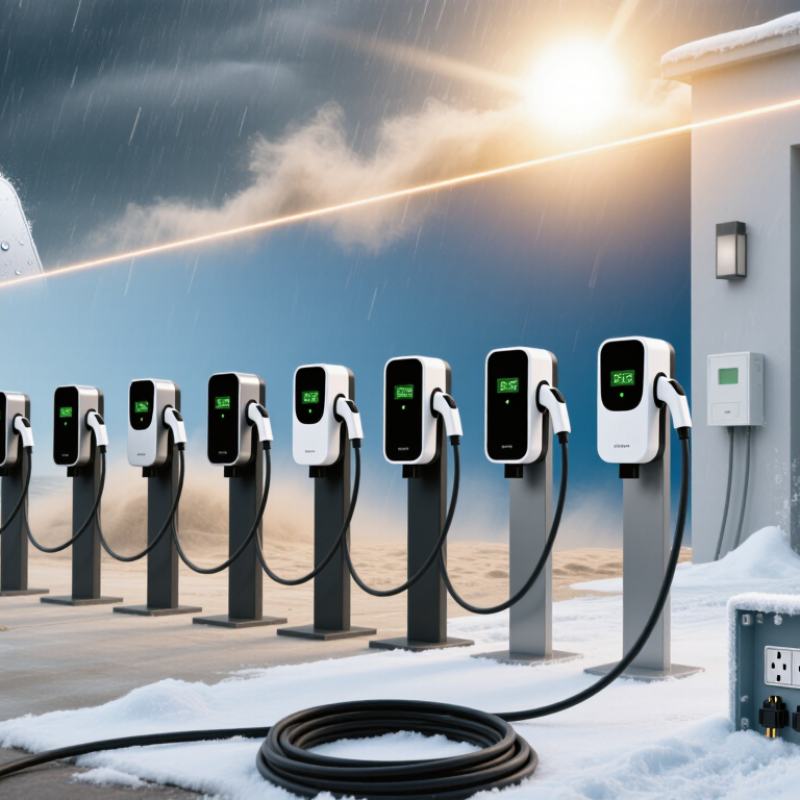
Choosing the right Outdoor Electric Car Charger is more complicated than comparing charging speeds and prices. A coastal driveway faces salt air, while a snowy garage entrance demands reliable cold-weather performance. Dust, rain, sunlight, cable length, and local electrical capacity can all affect daily charging. Small details matter.

This guide examines ten outdoor chargers for global buyers, using practical criteria rather than marketing claims. We consider power output, weather resistance, installation requirements, connector compatibility, safety controls, app reliability, and warranty support. Real-world ownership experience also matters: a bright display may be useful at night, but a stiff cable can become frustrating every morning. Professional specifications and manufacturer documentation provide the foundation, while user feedback reveals problems that laboratory testing may overlook.

No charger fits every driveway. Some models offer excellent performance but require costly electrical upgrades. Others are affordable and dependable, yet provide fewer smart features. Regional voltage standards, plug types, and certification requirements can differ substantially, so buyers should confirm local compatibility with a qualified electrician. This comparison aims to clarify those decisions without pretending that one product is perfect. We may overlook an unusual installation challenge. That is worth remembering. The best choice balances vehicle needs, climate, household wiring, long-term support, and realistic charging habits. With careful evaluation, drivers can choose an outdoor solution that feels safe, practical, and dependable through changing seasons.

10 Best Outdoor Electric Car Chargers for Global Buyers

Outdoor Electric Car Chargers: Definition, Types, and Core Features

Outdoor electric car chargers are weather-ready devices installed outside homes, workplaces, hotels, or public parking areas. They transfer electricity from a circuit to a vehicle through a charging connector.

Unlike a portable emergency cable, a dedicated unit manages current, safety checks, and charging schedules. They are not identical.

Common types include AC Level 2 chargers and DC fast chargers.

AC units usually suit overnight home charging, delivering steady power while a car sits in a driveway.

DC chargers send converted power directly to the battery, reducing waiting time but requiring stronger electrical infrastructure.

Solar-assisted systems can lower grid demand, although cloudy weather limits their output. Tethered cables offer convenience. Untethered sockets provide flexibility.

A reliable outdoor charger needs a high weather-resistance rating, secure mounting, and protection against leakage current, overheating, and surges.

Look for load balancing when several vehicles share one electrical circuit. A clear display or mobile connection can show charging status, but software should not replace physical safety controls.

In coastal areas, corrosion-resistant materials matter. In cold climates, cable flexibility matters too.

Electrical standards vary by country, so suitable certification deserves attention. Installation should be checked by a qualified electrician, especially when upgrading the service panel.

Weather changes everything. Many buyers focus on charging speed and overlook cable storage. That small detail becomes frustrating in rain.

No charger fits every driveway.

Review the parking distance, local voltage, vehicle inlet, and available power before choosing. Advertised output may not match daily conditions.

How to Compare Charging Speed, Compatibility, Safety, and Weather Resistance

Choosing an outdoor electric car charger starts with real charging needs, not the highest advertised wattage. The IEA’s Global EV Outlook 2024 reported nearly 14 million electric car sales in 2023, increasing pressure on home and public charging infrastructure. A 7–11 kW AC unit suits many overnight routines. Higher output helps larger batteries, but only when the vehicle and electrical supply support it. Faster is not always better.

Compatibility requires careful checking. Compare the vehicle’s connector, regional voltage, phase type, and charging protocol. A plug may fit physically yet deliver limited power. Weather resistance matters just as much. Look for a clear IP rating, protected cable connections, UV-resistant housing, and an operating temperature range suitable for local winters and summers. IP65 can resist dust and water jets, but it does not mean safe immersion. That distinction is easy to miss.

Safety features deserve equal attention. Residual-current protection, temperature monitoring, automatic fault shutdown, and certified installation reduce risks around wet driveways. The U.S. Department of Energy notes that charging equipment performance depends on electrical capacity, climate, and usage conditions. Cold weather can lengthen charging time, while direct sunlight can raise enclosure temperatures. I have found that cable handling is often overlooked; a stiff cable becomes awkward below freezing. My earlier assumption that maximum power solved every problem was incomplete. Verify the circuit, certification, connector standard, and local weather exposure before comparing prices.

Top Outdoor Charger Options for Different Vehicles, Climates, and Budgets

10 Best Outdoor Electric Car Chargers for Global Buyers

The best outdoor charger depends on the vehicle, climate, and available wiring. The International Energy Agency reported nearly 14 million electric car sales in 2023, showing why compatibility matters across markets. Check the vehicle’s connector, charging standard, and maximum AC input before buying. A 7.4 kW unit suits many homes, while 11 kW or 22 kW models need compatible three-phase infrastructure. More power is not always better.

For wet or dusty driveways, look for a tested IP65 or higher enclosure, UV-resistant housing, and a sealed cable connection. In cold regions, a flexible cable remains easier to handle below freezing. In hot climates, thermal monitoring and automatic power reduction can protect the system. The U.S. Department of Energy notes that charging performance depends on equipment, wiring, temperature, and vehicle limits. That detail is easy to overlook. A charger may advertise high output but deliver less outdoors during extreme heat.

Tips: Ask a qualified electrician to inspect the circuit, grounding, and residual-current protection. Choose adjustable amperage for older homes and smaller budgets. Keep the unit under a roof when possible, even with weather protection. Test the cable length beside the parked vehicle. I once underestimated this distance; it created daily inconvenience. Also check local certification requirements, warranty terms, and replacement-part availability. These practical details often matter more than a glossy specification sheet.

Installation, Power Requirements, Connectivity, and Maintenance Considerations

For global buyers, the ten best outdoor electric car chargers should be judged by installation, power, connectivity, and maintenance—not appearance alone. The IEA’s Global EV Outlook 2024 reports more than four million public charging points worldwide in 2023. This growth increases pressure on home and workplace electrical systems. A qualified electrician should verify circuit capacity, grounding, cable routing, and local approval requirements before installation. Outdoor units should offer weather protection, residual-current protection, and durable connectors. An IP54 rating may suit sheltered areas, while exposed locations often need stronger protection.

Power requirements vary by household and vehicle. Single-phase chargers commonly deliver 3.7 to 7.4 kW, while three-phase systems can reach 11 or 22 kW. However, a 22 kW charger is useless without compatible vehicle hardware and sufficient supply capacity. The U.S. Department of Energy notes that Level 2 charging can add roughly 25 to 50 miles of range per hour, depending on the vehicle and equipment. Actual results differ. That detail is often overlooked.

Connectivity improves scheduling, energy monitoring, and fault reporting. Wi-Fi is convenient, but cellular connectivity can perform better in detached garages. Open communication protocols may reduce dependence on one software provider. Maintenance still needs attention: inspect cables for cracking, clean ventilation paths, test protection devices, and check firmware periodically. The International Energy Agency also highlights rising charging demand, making reliability increasingly important. A poorly sealed enclosure can fail early. Even strong specifications cannot replace careful installation.

10 Best Outdoor Electric Car Chargers for Global Buyers - Installation, Power Requirements, Connectivity, and Maintenance Considerations

Rank Outdoor Charger Configuration Typical Regional Fit Maximum AC Output Electrical Supply and Circuit Connector Options Outdoor Protection Connectivity and Control Installation Requirements Maintenance Considerations
1 Universal 7.4 kW Smart Wall Charger Europe Asia-Pacific Middle East Up to 7.4 kW 230 V AC, single-phase, 32 A dedicated circuit. Use overcurrent protection and residual-current protection required by local code. Type 2 socket or tethered Type 2 cable Typically IP55 or higher; IK08 or higher recommended for exposed locations Wi-Fi, Bluetooth, optional Ethernet; scheduled charging and energy monitoring Professional installation; suitable earthing, cable routing, weatherproof enclosure, and load assessment required. Inspect cable, plug, seals, and enclosure every 6–12 months. Keep ventilation openings clean and test protective devices according to local regulations.
2 North American 9.6 kW Connected Charger United States Canada Up to 9.6 kW 240 V AC, single-phase, 40 A continuous load. A 50 A circuit is commonly required when applying a 125% continuous-load rule. SAE J1772; some installations use an adapter for newer vehicle inlets NEMA 3R or equivalent outdoor enclosure; ground-fault protection required Wi-Fi and Bluetooth; mobile application support; optional demand management Use a qualified electrician and comply with applicable electrical, building, and utility requirements. Hardwired installation is preferred outdoors. Check GFCI or equivalent protection, cable wear, mounting hardware, and water ingress. Replace damaged plugs or cables immediately.
3 Three-Phase 11 kW Network Charger Europe Africa Asia-Pacific Up to 11 kW 400 V AC, three-phase, 16 A per phase. Requires balanced phase connections and an appropriately rated protective device. Type 2 socket or tethered Type 2 cable IP55–IP65; corrosion-resistant housing recommended near coastal areas Ethernet, Wi-Fi, or 4G; OCPP-compatible operation can support remote monitoring Requires three-phase service, correct phase rotation, suitable earthing, and an installation test before commissioning. Review communications status, thermal performance, connector condition, and enclosure seals annually. Clean with a damp cloth; do not use high-pressure water.
4 Three-Phase 22 kW High-Power Charger Europe Australia Commercial Sites Up to 22 kW 400 V AC, three-phase, 32 A per phase. The vehicle must support 22 kW AC charging to use the full rated output. Type 2 socket or tethered Type 2 cable IP65 preferred; IK08–IK10 mechanical protection for public or shared parking Ethernet, Wi-Fi, 4G, RFID, and OCPP-supported remote management Requires a higher-capacity supply, coordinated protection, adequate cable size, and possible utility approval. Dynamic load management is useful where supply capacity is limited. Inspect contactors, terminals, cable strain relief, and thermal sensors. Schedule electrical testing and firmware updates at least annually.
5 North American 11.5 kW Hardwired Charger United States Canada Up to 11.5 kW 240 V AC, single-phase, 48 A continuous load. A 60 A circuit is commonly used where permitted by local electrical rules. SAE J1772; vehicle-specific inlet compatibility should be verified NEMA 3R or better; UV-resistant cable and enclosure recommended Wi-Fi, Bluetooth, optional cellular connection; charging schedules and usage reports Hardwired installation by a licensed electrician is generally required. Confirm panel capacity, conductor sizing, and local disconnect requirements. Test ground-fault protection, inspect terminal torque, and check for heat discoloration or cable damage during periodic service.
6 High-Current 19.2 kW AC Charger North America Large Homes Fleet Sites Up to 19.2 kW 240 V AC, single-phase, 80 A continuous load. A 100 A circuit may be necessary, subject to service capacity and local code. SAE J1772 or compatible AC connector NEMA 3R minimum for outdoor use; robust mounting and impact protection recommended Ethernet, Wi-Fi, 4G, RFID, and remote power control; load balancing is strongly recommended Requires substantial electrical capacity, large conductors, appropriate disconnecting means, and professional load calculations. Not suitable for every residential service. Inspect cable temperature, terminals, contactor operation, enclosure seals, and protective-device records. Annual professional inspection is recommended.
7 Compact 3.7 kW Portable-Ready Charger Global Residential Low-Capacity Grids Up to 3.7 kW 230 V AC, single-phase, 16 A. Suitable for many standard dedicated circuits, subject to outlet rating and local requirements. Type 2 or regional AC connector; portable cable options may be available IP54–IP65 depending on configuration; use a weatherproof outlet and protected mounting point Bluetooth or Wi-Fi on smart versions; basic models may have no network connection Use a dedicated circuit whenever possible. Avoid extension cords and household outlets that are not rated for continuous EV charging. Check the plug, socket temperature, cable insulation, and water exposure before each regular use. Store portable cables dry and protected.
8 Solar-Ready 7.4 kW Load-Balancing Charger Europe Australia Solar Homes Up to 7.4 kW 230 V AC, single-phase, up to 32 A. Output can be reduced automatically to remain within the property’s available supply. Type 2 socket or tethered Type 2 cable IP55 or higher; UV-resistant materials recommended for rooftop or driveway locations Wi-Fi, Ethernet, or Bluetooth; solar-surplus charging and dynamic load management Requires integration with a compatible energy meter or inverter system. Electrical commissioning should verify current sensors and phase direction. Keep energy meters, sensors, and communication equipment operational. Review charging data after electrical-system changes or solar-inverter replacement.
9 Dual-Port 2 × 11 kW Shared Charger Apartments Hotels Workplaces Up to 22 kW total, shared dynamically between two vehicles 400 V AC, three-phase. Supply rating depends on simultaneous charging and configured power sharing. Two Type 2 sockets or two tethered Type 2 cables IP55–IP65; IK10 recommended for shared or public locations Ethernet, Wi-Fi, 4G, RFID, OCPP, user authorization, and billing integration Requires site load analysis, accessible mounting, protective bollards where needed, and clear cable-management space. Inspect both ports, locking mechanisms, displays, payment or access systems, and network connection. Clean and test each charging outlet separately.
10 Cold-Climate 11 kW Rugged Charger Northern Europe Canada Cold Regions Up to 11 kW 400 V AC, three-phase, 16 A per phase. Confirm derating requirements for low temperatures and long cable runs. Type 2 or SAE J1772 according to vehicle market IP65 preferred; IK08 or higher; enclosure heater and cable-temperature management may be included Wi-Fi, Ethernet, 4G, Bluetooth, and remote diagnostics depending on configuration Install on a stable foundation with snow clearance, drainage, adequate cable flexibility, and protection from plowed snow or standing water. Remove ice without striking the connector, inspect seals after freeze–thaw cycles, and check cable flexibility, heater operation, and condensation control.

Technical values are representative configurations based on common AC charging ratings. Actual power, connector compatibility, protection requirements, installation methods, and permitted continuous-load calculations must be verified against the vehicle, local electrical code, utility rules, and a qualified electrician’s assessment.

Global Buying Factors: Standards, Certifications, Warranty, and Regional Support

Choosing an outdoor electric car charger for global use requires more than checking charging speed. Standards must match your vehicle, socket, and local electrical system.

Type 2 is common across Europe, while J1772 remains widely used in North America. Some vehicles also require a certified adapter. Verify compatibility before ordering.

Look for safety certifications accepted in the destination market, such as CE, UKCA, UL, or equivalent national approval. Certification labels should appear on the charger and its documentation.

Check the operating voltage, frequency, residual-current protection, and weather rating. An IP65 or higher enclosure can handle rain and dust, but it may not survive poor installation.

Cold winters, direct sun, and salty coastal air also affect durability. I once focused too heavily on power output and overlooked cable flexibility in freezing weather. That was a useful, slightly expensive lesson.

Tips:

Ask for warranty terms in writing. Confirm whether coverage includes shipping, replacement parts, software, and labor.

A two-year warranty sounds useful, but regional support matters more when a fault occurs. Check service response times, local repair partners, spare-part availability, and language support.

Keep invoices and installation records. Some warranties may exclude damage from improper grounding or unapproved wiring.

Also, confirm whether the charger supports local energy regulations and professional installation requirements.

A reliable purchase is not always the cheapest one.