Best Electric Car Charger Business Solutions for Global Buyers?
The electric vehicle (EV) market is rapidly growing, creating a vibrant landscape for the Electric Car Charger Business. According to a report by the International Energy Agency, global electric car sales surged to over 6 million units in 2021, a 108% increase from the previous year. With this rise, the demand for effective charging solutions has never been more critical.
Investors and businesses must navigate this evolving market wisely. By 2030, the global electric vehicle charging infrastructure could represent a market worth over $100 billion. However, many entrepreneurs face challenges in selecting the best chargers for their offerings. Reliability and user experience in charging solutions can significantly impact customer satisfaction.
Understanding the dynamics of this business is essential. Reports indicate that up to 40% of potential EV owners cite insufficient charging infrastructure as a barrier. As businesses explore opportunities, they must consider innovative solutions that meet varied consumer needs. Balancing investment with environment-friendly technology while ensuring profitability poses both risks and opportunities. In this context, selecting the right electric car charger solutions becomes crucial for sustained growth.
Overview of Electric Car Charger Business Solutions
The electric vehicle (EV) market is booming, driving an increased demand for efficient charging solutions. According to a report by the International Energy Agency, global EV sales surged to 6.6 million units in 2021, marking a 108% increase from the previous year. This rapid growth creates vast opportunities for businesses in the electric car charger sector.
One critical business solution involves optimizing charging infrastructure. Many regions lack adequate charging stations, particularly in rural areas. A 2022 survey revealed that over 30% of EV owners were concerned about charging accessibility. Addressing these gaps can significantly enhance consumer trust. Urban areas may benefit from fast charging stations, while residential solutions can target home-based charging. However, logistics and costs can be substantial, which poses challenges for new entrants.
Additionally, companies must prioritize user experience in their solutions. Seamless payment systems, mobile app integration, and real-time tracking enhance convenience. Yet, challenges remain with compatibility across different EV models. Many users report frustration with non-universal chargers. Focusing on these aspects will be essential for businesses aiming to thrive in this competitive environment. Balancing efficiency, user feedback, and innovative technologies will shape the future of electric car charging solutions.
Key Features of Electric Car Charger Solutions for Buyers
When considering the best electric car charger solutions, buyers should focus on several key features. One important aspect is compatibility. Not all chargers work with every electric vehicle model. A reliable charger should support a wide range of vehicles. This flexibility allows for ease of use, especially in mixed fleets.
Another critical feature is charging speed. Fast charging capabilities can greatly reduce waiting times. Buyers must assess the charger’s output power and charging time. Generally, Level 2 chargers offer a good balance between speed and efficiency. However, performance can vary, requiring buyers to research thoroughly.
Durability is essential for any charging solution. Many chargers face harsh weather conditions. A high-quality charger should resist environmental damage. Buyers should also consider ease of installation. Some solutions may require professional assistance, which adds to the cost. Balancing these factors is key to making an informed purchase. It’s crucial to reflect on one’s specific needs and local charging infrastructure. This consideration can greatly influence satisfaction and usability.
Best Electric Car Charger Business Solutions for Global Buyers
| Feature |
Description |
Benefits |
Compatibility |
| Fast Charging |
High power output for reduced charging time. |
Convenient and time-saving for users. |
Compatible with most electric vehicles. |
| Smart Charging |
Remote control and monitoring via mobile app. |
Enhanced user experience and energy management. |
Works with various app platforms. |
| Durability |
Weatherproof and robust design for outdoor use. |
Long-lasting performance and reliability. |
Suitable for all climates. |
| User-Friendly Interface |
Intuitive controls for ease of use. |
Accessible for all users, including those unfamiliar with technology. |
Compatible with diverse user backgrounds. |
| Safety Features |
Overcurrent, overvoltage, and temperature protection. |
Increased safety for users and equipment. |
Compliant with international safety standards. |
Market Trends in Electric Car Charging Technology
The electric car charging market is evolving rapidly. As more buyers flock to electric vehicles, the demand for accessible charging solutions has surged. Charging technology now emphasizes user-friendliness and speed. Innovations in fast charging are helping to reduce wait times, thus encouraging wider adoption of electric vehicles.
Market trends show a shift toward sustainable energy sources. Companies are investing in renewable energy to power charging stations. This transition not only supports green initiatives but also addresses energy concerns tied to conventional sources. Stakeholders must balance innovation with practicality. High-tech solutions can sometimes overlook the needs of everyday users.
Additionally, the integration of smart technology into charging systems is on the rise. These systems allow users to monitor and manage charging remotely. However, issues such as compatibility and accessibility remain. Providers should consider diverse user experiences. It's essential to refine these technologies while being mindful of the end-user perspective.
Market Trends in Electric Car Charging Technology
Evaluating Supplier Credentials and Reliability
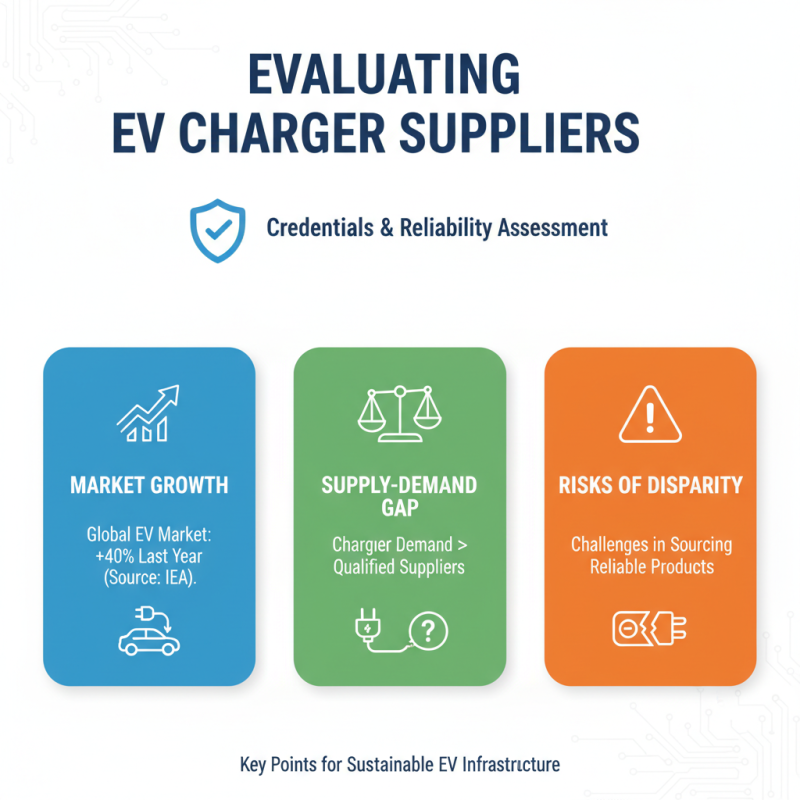
When assessing electric car charger suppliers, it's essential to examine their credentials closely. Data from the International Energy Agency shows that the global electric vehicle (EV) market has surged over 40% in the past year. Yet, the rise in demand for chargers hasn't always aligned with the number of qualified suppliers. This disparity can lead to challenges in sourcing reliable products.
Reliability is a crucial factor when choosing a supplier. Many companies claim expertise, but not all have the track record to back it up. According to a recent report, only 30% of suppliers passed rigorous industry certifications. This means buyers must conduct thorough due diligence. Checking for ISO certifications and customer reviews can uncover potential red flags.
Moreover, consider the geographical footprint of a supplier. A local supplier may provide faster service, but their range may be limited. On the other hand, international suppliers often have extensive catalogs but might pose logistical challenges. A balanced approach is necessary. Evaluate the supply chain thoroughly, as disruptions can impact installation timelines.
Cost Considerations and ROI for Electric Car Chargers
The market for electric vehicle (EV) charging solutions is rapidly evolving. Many businesses see opportunities in this growth. However, cost considerations are vital for success. For global buyers, understanding the financial implications of electric car chargers is essential.
Installation costs can vary significantly. A report by the International Energy Agency estimates that the cost of public charging infrastructure can range from $10,000 to $50,000 per station. This wide range reflects factors like location and charging speed. ROI also matters. Businesses may take 3 to 5 years to recover their investment. Revenue from charging fees can be unpredictable and often relies on customer demand.
Maintenance and operational costs can further affect profitability. Regular upkeep is necessary but can be overlooked. Some companies face challenges in monitoring energy consumption efficiently. Effective management of these costs is crucial. With increasing EV adoption, buyers must evaluate both upfront expenses and long-term financial returns. Balancing investment and ROI is critical for sustainable growth in this sector.


 Phone
Phone Send Email
 whatsapp
 Facebook
 Youtube