2026 Top Trends in Ac Charging Pile Technology and Innovations?
As we approach 2026, the landscape of Ac Charging Pile technology is rapidly evolving. This transformation brings both exciting innovations and challenges. New advancements promise to make charging easier and more efficient. Yet, with new tech comes the need for improvements in standards and accessibility.
The rising demand for electric vehicles drives the Ac Charging Pile market. Many companies are investing heavily in research and development. Innovative features like faster charging times and smart grid integration are emerging. However, some technologies still face limitations. Reliability and compatibility with various vehicle models need attention.
Environmental concerns remain prominent as well. While charging piles reduce emissions, sourcing materials for these devices poses a dilemma. Striking a balance between innovation and sustainability is crucial. As we look to the future, embracing growth while acknowledging challenges is essential for advancing Ac Charging Pile technology.
Emerging Technologies in AC Charging Pile Design for 2026
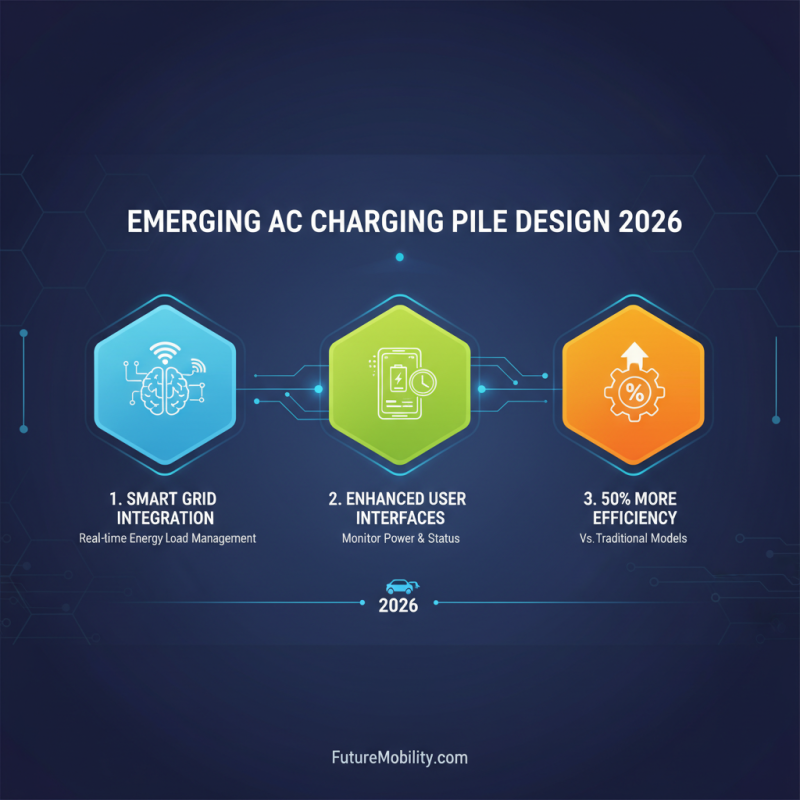
The landscape of AC charging pile technology is evolving rapidly as we approach 2026. Emerging trends highlight the integration of smart grid features and enhanced user interfaces. These advancements will enable real-time monitoring of power consumption and charging status. Industry reports indicate that by 2026, smart charging stations could manage energy loads up to 50% more efficiently than traditional models.
Another significant trend is the development of modular charging solutions. These designs allow for easy scalability and maintenance. According to recent studies, the adoption of modular technology may lead to up to 30% reduction in installation costs. This shift presents both opportunities and challenges; while flexibility is essential, the initial installation complexities could deter some users.
Sustainability is also a critical factor driving innovation in AC charging pile design. The use of eco-friendly materials and energy-efficient systems is gaining traction. Reports suggest that by 2026, eco-design approaches could reduce carbon emissions associated with charging infrastructure by nearly 40%. However, achieving these targets requires careful planning and investment, as not all manufacturers are on board with green technologies yet.
Advancements in Smart Charging Infrastructure and Network Integration
The evolution of AC charging pile technology is changing the landscape of electric vehicle charging. Smart charging infrastructure plays a crucial role in this transformation. These systems can optimize energy usage based on real-time demand. They monitor the charging process and adjust power delivery accordingly. This efficiency helps balance the load on the electrical grid.
Integrating charging stations into existing networks presents challenges. Connectivity issues can lead to inconsistent service. The communication between charging stations and grid operators must be seamless. Innovations like vehicle-to-grid technology may offer solutions. However, these advancements require careful planning and implementation.
User experience is also a critical factor. Customers often struggle with finding available charging stations. An intuitive app could streamline this process. However, many solutions still fall short, leading to frustration. Continuous feedback from users can drive improvements in smart charging systems. This ongoing dialogue remains essential for future developments.
2026 Top Trends in AC Charging Pile Technology and Innovations
Innovations in Plug and Play Solutions for AC Charging Stations
The future of AC charging pile technology is witnessing remarkable innovations, particularly in plug and play solutions. These systems are designed for easy installation and operation, making them accessible for various users. Imagine a scenario where charging stations can be set up in less than an hour, simplifying the process for businesses and individuals alike.
One significant aspect of plug and play solutions is their compatibility with different vehicle models. However, this adaptability raises questions about standardization. With numerous electric vehicle models on the market, a universal plug might enhance the user experience. Yet, achieving this uniformity can be challenging.
Moreover, the design of these systems is evolving. They are becoming more compact and user-friendly, which is a positive development. Yet, a major concern remains: user education. If people don’t understand how to use these innovations, their potential may not be fully realized. There is much to consider, and these challenges must be addressed to truly harness the benefits of AC charging technology.
2026 Top Trends in AC Charging Pile Technology and Innovations
| Trend |
Description |
Impact |
Implementation Year |
| Smart Charging Solutions |
Integration of AI and IoT for optimizing charging times and costs. |
Enhanced user experience and reduced energy costs. |
2026 |
| Ultra-Fast Charging |
Development of AC chargers that can deliver higher power levels. |
Decreased charging time significantly. |
2025 |
| Modular Design |
Charging piles that can be easily expanded or upgraded. |
Flexibility in meeting future energy demands. |
2026 |
| Wireless Charging Technology |
Implementation of inductive charging solutions for ease of use. |
Convenience for users and reduction in wear and tear. |
2026 |
| Renewable Energy Integration |
Use of solar and wind energy systems to power charging stations. |
Sustainability and reduced carbon footprint. |
2026 |
The Role of Renewable Energy in AC Charging Pile Operations
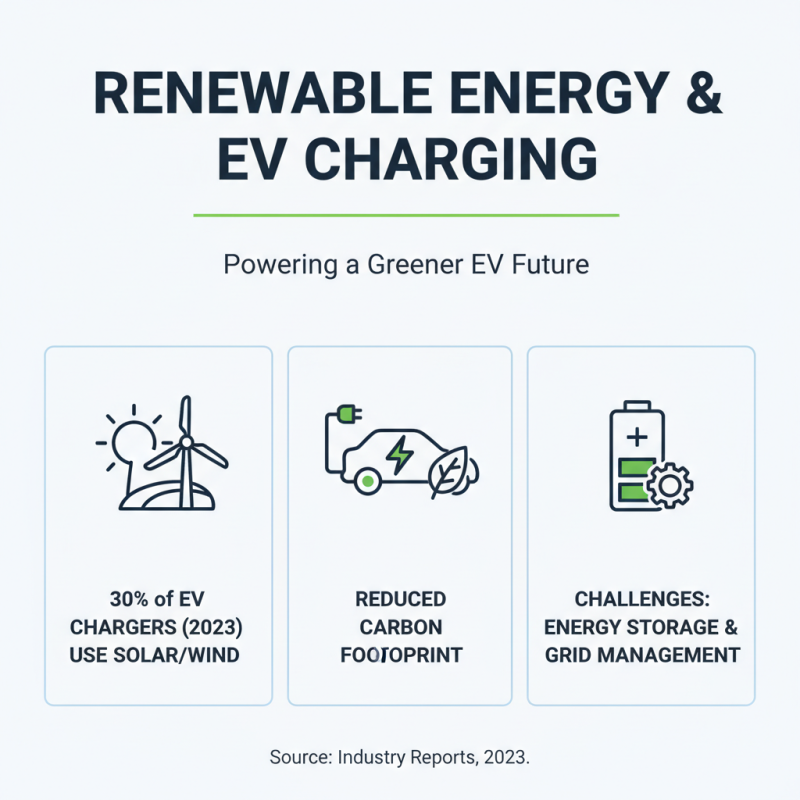
The integration of renewable energy into AC charging pile operations is transforming the electric vehicle (EV) landscape. In 2023, approximately 30% of EV charging stations utilized solar or wind energy sources, according to recent industry reports. This shift reduces the carbon footprint of charging processes significantly. However, challenges remain in energy storage and grid management.
Despite advancements, not all regions have reliable renewable energy access. Some charging stations still rely heavily on traditional energy sources. Ineffective integration can lead to energy waste and inefficiency, especially during peak demand times. Additionally, the cost of installing renewable energy systems can inhibit widespread adoption among charging station operators.
Innovative solutions are emerging to address these challenges. For example, smart grid technologies can optimize energy distribution from renewable sources to charging piles. Furthermore, data suggests that integrating energy storage systems can enhance the reliability of renewable energy in charging operations. Yet, gaps in technology and infrastructure persist, requiring ongoing investments and research to fully harness the potential of renewables in EV charging systems.
User Experience Enhancements in AC Charging Applications and Interfaces
Electric vehicle (EV) charging is evolving rapidly. User experience is becoming a focal point in AC charging applications. As more drivers adopt EVs, the importance of intuitive interfaces grows. Simplified designs can enhance interactions during charging. For instance, clearer displays that show charging status in real-time can prevent user frustration.
Many users struggle with complex menus on charging stations. Reducing the number of steps for starting the charge could greatly benefit drivers. One-button activation might seem simplistic. However, it could make charging less daunting for novices. Including visual icons alongside text may also bridge the gap for non-tech-savvy users.
Personalization options in charging apps are gaining traction. Drivers appreciate features like remembering previous locations or preferred charging speeds. However, not all apps handle this effectively. Some still lack customization. Feedback tools within apps can improve future updates. Understanding user pain points leads to a better overall experience.



 Phone
Phone Send Email
 whatsapp
 Facebook
 Youtube